

What is a kidney stone?
A kidney stone is a solid formation formed from chemicals present in urine. They can be classified as calcium oxalate, uric acid, struvite, or cystine. These small, hard mineral deposits can develop within the kidney and may either remain in the kidney or pass through the urinary tract. Ranging in size from as small as a grain of sand to as large as a pearl, kidney stones have been a persistent issue in the urinary system throughout history. Among them, calcium-oxalate stones are the most prevalent and can be triggered by factors such as dietary intake of salt or oxalates, certain medications, genetic predisposition, and other kidney-related conditions. Overall, kidney stone disease stands as one of the oldest and most prevalent problems affecting the urinary system.
At Lifeline General Hospital Nepalgunj, we provide all treatment services for kidney diseases.
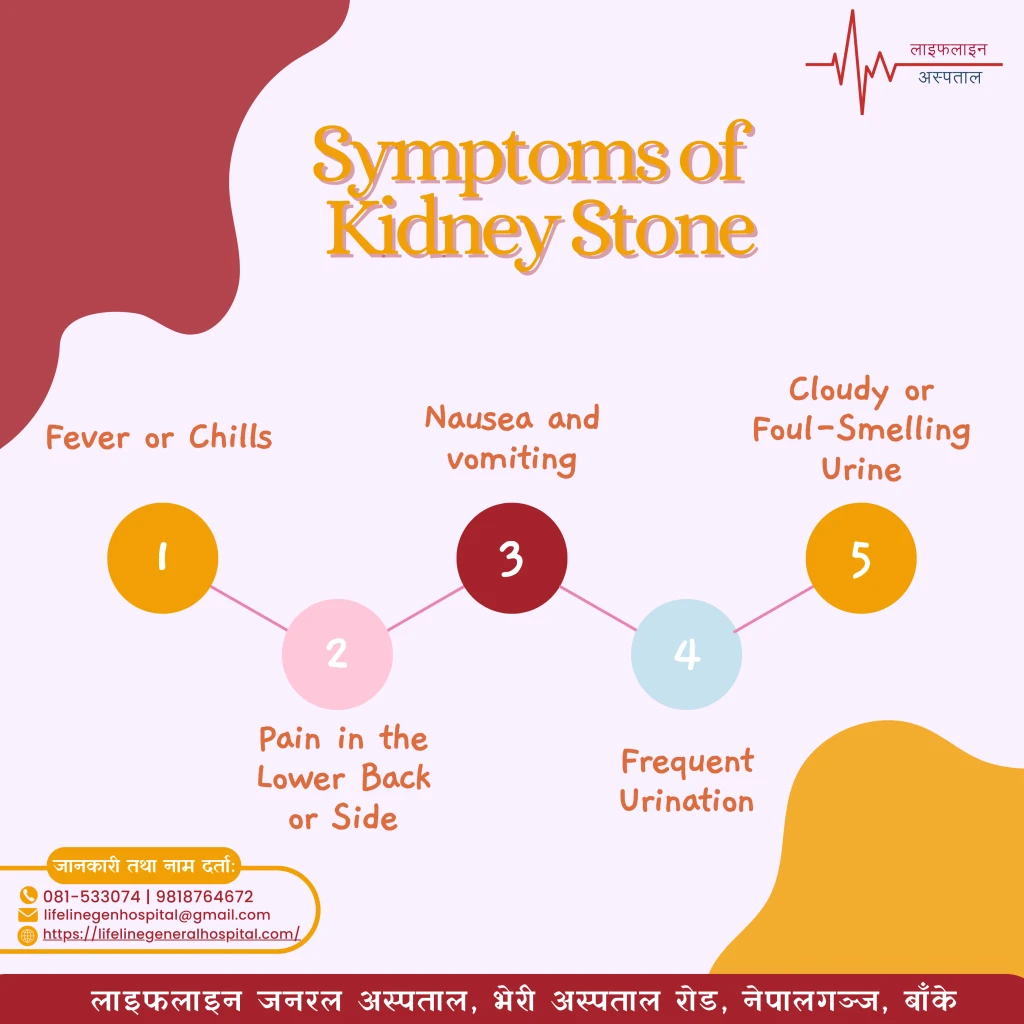
Recognizing kidney stone symptoms: What are the telltale signs?
Kidney stones can often go unnoticed for years, but when they start moving or reach a significant size, various symptoms may manifest. Common indicators include:
- Pain in the Lower Back or Side:
- Dull ache that may come and go
- Intensifying into severe pain, requiring emergency attention
- Nausea and vomiting:
- Often accompanying the pain associated with kidney stones
- Blood in Urine:
- Observable discoloration indicating potential kidney stone presence
- Pain During Urination:
- Discomfort or pain experienced while urinating
- Inability to Urinate:
- A potential complication in some cases
- Frequent Urination:
- Feeling the need to urinate more often than usual
- Fever or Chills
- Indicators of possible infection or complications
- Cloudy or Foul-Smelling Urine:
- Changes in urine appearance and odor
- Intense Need to Urinate:
- A sensation of urgency related to kidney stone presence
- Additional Symptoms (In severe cases or during stone movement):
- Pain radiating to the groin area, testicles (in men), or labia (in women)
- Discomfort persisting in the lower belly area or back
- Persistent stomachache
It’s important to note that some kidney stones, especially smaller ones, may pass without noticeable symptoms, making it crucial to be cautious and seek medical attention if any signs of kidney stones become apparent.
What is the cause of kidney stones?
Kidney stones result from the crystallization of substances present in urine, including calcium, oxalate, uric acid, phosphate, cystine, and, rarely, xanthine. Normally, these substances pass through the urinary system, but insufficient urine volume can lead to their concentration and crystallization. Dehydration, often due to factors like strenuous exercise or inadequate fluid intake, contributes to low urine volume, causing urine to become concentrated and dark. Low urine volume is a significant risk factor for kidney stones, and increasing fluid intake can help dilute the salts in urine, reducing the risk of stone formation.
Additionally, dietary factors, such as high levels of calcium or animal protein, can influence stone development. Conditions like certain bowel disorders or surgeries, obesity, specific medical conditions, and family history further contribute to the risk. Medications and supplements, especially calcium and vitamin C supplements, may also impact stone formation. Understanding these factors is crucial for effective prevention and management of kidney stones.
How do kidney stones get diagnosed?
Diagnosing kidney stones involves a comprehensive approach, starting with a discussion of the patient’s medical history and the recommendation of specific tests by the healthcare provider. These tests include:
- Imaging procedures such as X-rays, CT scans, and ultrasounds, which provide crucial information about the size, shape, location, and number of kidney stones, aid in determining the appropriate course of treatment.
- Blood tests are conducted to assess kidney function, identify potential infections, and detect biochemical issues that may contribute to kidney stone formation.
- Urine tests are also employed to identify signs of infection and analyze the levels of substances involved in kidney stone development.
How do kidney stones get treated?
Upon receiving a kidney stone diagnosis, your healthcare provider will assess whether treatment is necessary. Treatment selection depends on factors such as stone type, severity, and symptom duration. For smaller stones that may pass through urination, observation is a common approach. If treatment is considered essential, options include medications and various surgical procedures. Medications may be prescribed to alleviate pain, manage nausea and vomiting, and facilitate the passage of stones.
Surgical interventions are considered in cases where stones don’t pass naturally, the pain is intolerable, or kidney function is compromised. Minimally invasive procedures like ureteroscopy and shockwave lithotripsy involve entering the body through natural openings or small incisions. Ureteroscopy utilizes a tiny instrument to visualize and retrieve or break down stones, while shockwave lithotripsy employs high-energy shockwaves to fragment stones, facilitating their elimination. Percutaneous nephrolithotomy, a more invasive option, involves a tube inserted through a small back incision to disintegrate and suction out larger stones, often requiring an overnight hospital stay. Open stone surgery, a rarely performed option, entails longer incisions and is considered in a small percentage of cases.
The choice of treatment should be discussed thoroughly with your healthcare provider to determine the most suitable approach based on your specific circumstances.
What can I do to avoid kidney stones?
Preventing kidney stones involves adopting various lifestyle and dietary measures.
- Staying well-hydrated by drinking at least six to eight 8-ounce glasses of water daily helps flush out substances that contribute to stone formation.
- Limiting sodium intake, seeking guidance from a dietitian, and maintaining a healthy weight are essential.
- Eating a balanced diet rich in fruits and vegetables while moderating oxalate-rich foods and animal proteins.
- Regular communication with healthcare providers ensures tailored preventive strategies, considering individual circumstances and stone composition.
- Maintaining prescribed medications, following dietary recommendations, and staying adequately hydrated are crucial steps in kidney stone prevention.
A note from Lifeline
Dealing with kidney stones can be incredibly challenging, ranging from frustration to intense pain. Seeking prompt evaluation by a healthcare provider is crucial to prevent the situation from worsening, especially as severe pain may require surgical intervention. Adherence to prescribed medications, increased water intake, and strict adherence to dietary guidelines are essential for managing the condition effectively. It’s important to recognize that kidney stones are a temporary ailment, and with appropriate medical attention and lifestyle adjustments, the discomfort is not a permanent fixture. Patience, adherence to treatment plans, and a positive outlook are vital during this challenging period.
Follow our Facebook Page for additional tips on Kidney Stones.


Leave a Reply